
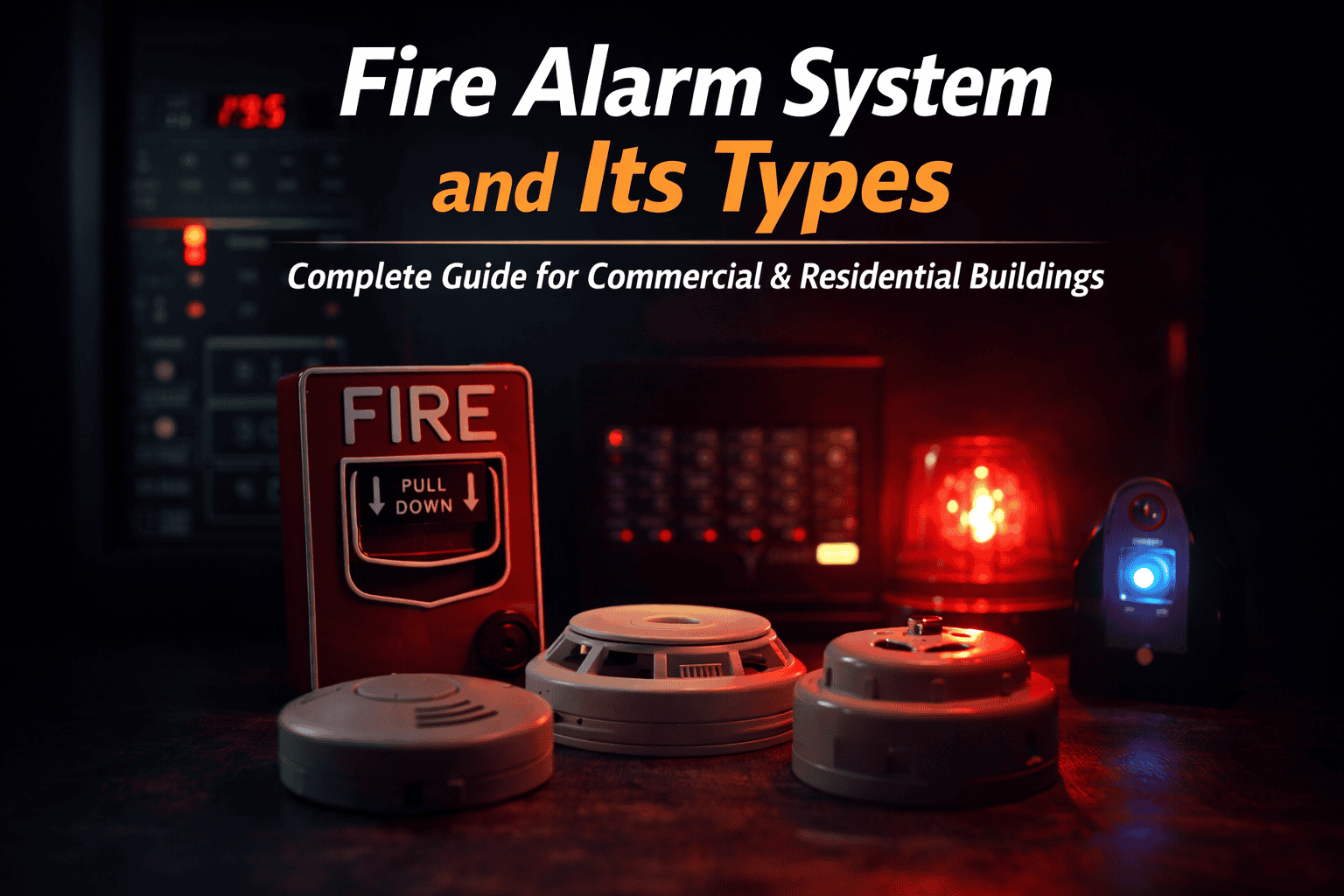
Fire emergencies can escalate within minutes, causing severe property damage, business disruption, and loss of life. One of the most critical life safety systems in any building is a fire alarm system. It acts as the first line of defense by detecting fire at its earliest stage and alerting occupants for safe evacuation.
In this comprehensive guide, we will cover:
- What a fire alarm system is
- How it works
- Main components
- Types of fire alarm systems
- Detection technologies
- Where each type is used
- Why proper installation and maintenance are essential
If you are planning a commercial, industrial, healthcare, or residential project, understanding fire alarm systems is essential for safety and compliance.
What is a Fire Alarm System?
A fire alarm system is an integrated network of devices designed to detect smoke, heat, or flames and notify building occupants through audible and visual alerts.
The system can also:
- Automatically activate fire suppression systems
- Notify emergency services
- Shut down HVAC systems
- Control elevators
- Manage smoke control systems
A properly designed fire alarm system minimizes response time and significantly reduces the risk of casualties.
How Does a Fire Alarm System Work?
The operation of a fire alarm system follows a simple sequence:
- Detection of smoke, heat, or flame
- Signal sent to the fire alarm control panel (FACP)
- Activation of alarms (horns, strobes, speakers)
- Automatic system integration (if configured)
For example, in commercial buildings, when smoke is detected:
- Alarm sounds immediately
- Emergency lighting activates
- Fire department is notified
- Sprinkler or suppression system may engage
This rapid response can prevent a minor incident from turning into a major disaster.
Main Components of a Fire Alarm System
A complete fire alarm system includes:
1. Fire Alarm Control Panel (FACP)
This is the “brain” of the system. It receives signals from detectors and controls notification devices.
2. Detection Devices
These include:
- Smoke detectors
- Heat detectors
- Flame detectors
- Aspirating smoke detectors
3. Manual Pull Stations
Allows occupants to manually activate the alarm.
4. Notification Appliances
Includes:
- Horns
- Strobes
- Bells
- Voice evacuation systems
5. Power Supply & Backup Batteries
Ensures system operation even during power failure.
Types of Fire Alarm Systems
Fire alarm systems are categorized based on how devices are connected and how information is communicated to the control panel.
1. Conventional Fire Alarm System
A conventional system divides a building into zones.
If a detector is triggered, the panel identifies the zone but not the exact device location.
Suitable For:
- Small offices
- Schools
- Residential buildings
- Small commercial spaces
Advantages:
- Cost-effective
- Simple installation
- Easy operation
Limitations:
- Does not provide exact device location
- Not ideal for large or complex buildings
2. Addressable Fire Alarm System
An addressable system assigns a unique digital address to each device.
When activated, the panel shows the exact location of the detector.
Suitable For:
- Hospitals
- Hotels
- High-rise buildings
- Industrial facilities
- Large commercial complexes
Advantages:
- Pinpoint detection
- Faster troubleshooting
- Advanced monitoring
- Reduced wiring complexity
Limitations:
- Higher initial cost
- Requires trained technicians
Addressable systems are now considered the industry standard for medium to large projects.
3. Intelligent Fire Alarm System
An intelligent system is an advanced version of an addressable system.
It can:
- Analyze environmental data
- Reduce false alarms
- Monitor system health
- Integrate with Building Management Systems (BMS)
Ideal for mission-critical facilities such as:
- Data centers
- Airports
- Industrial plants
4. Wireless Fire Alarm System
Uses radio frequency signals instead of physical wiring.
Best For:
- Heritage buildings
- Renovation projects
- Temporary installations
Benefits:
- Minimal structural damage
- Quick installation
- Flexible configuration
However, battery maintenance is critical.
Types of Fire Detection Devices
Understanding detection types is equally important.
Smoke Detectors
Photoelectric Smoke Detector
- Detects smoldering fires
- Best for offices and residential areas
Ionization Smoke Detector
- Detects fast-flaming fires
- More responsive to small flame particles
Heat Detectors
Fixed Temperature Detector
Activates when a preset temperature is reached.
Rate-of-Rise Detector
Triggers when temperature increases rapidly.
Used in:
- Kitchens
- Parking areas
- Industrial workshops
Flame Detectors
Uses UV or IR technology to detect flame radiation.
Ideal for:
- Chemical plants
- Fuel storage areas
- Aircraft hangars
Aspirating Smoke Detection (ASD)
High-sensitivity system that continuously samples air.
Common in:
- Data centers
- Clean rooms
- Server rooms
Fire Alarm System Integration
Modern fire alarm systems integrate with:
- Sprinkler systems
- Smoke management systems
- Elevators
- HVAC systems
- Access control systems
This integration ensures coordinated emergency response.
Importance of Fire Alarm Systems in Commercial Buildings
In commercial and industrial environments, fire alarm systems are not optional.
They are required for:
- Regulatory approvals
- Insurance compliance
- Occupant safety
- Legal liability reduction
In many jurisdictions, building approval authorities require fire alarm systems to comply with international standards such as NFPA.
Benefits of Installing a Proper Fire Alarm System
✔ Early fire detection
✔ Reduced loss of life
✔ Minimized property damage
✔ Lower insurance costs
✔ Legal compliance
✔ Improved emergency response
Studies show that early detection dramatically increases evacuation success rates.
Maintenance and Testing Requirements
A fire alarm system must be:
- Inspected regularly
- Tested periodically
- Maintained professionally
Typical maintenance includes:
- Battery testing
- Detector cleaning
- System diagnostics
- Functional testing
Failure to maintain the system can lead to:
- False alarms
- System failure during emergencies
- Legal penalties
Common Mistakes in Fire Alarm System Installation
- Incorrect detector placement
- Inadequate zoning
- Lack of backup power
- Poor cable management
- Improper integration
Professional engineering design and certified installation are essential.
Choosing the Right Fire Alarm System
When selecting a system, consider:
- Building size
- Occupancy type
- Risk level
- Local regulations
- Budget
- Future expansion needs
For small buildings, a conventional system may suffice.
For large facilities, an addressable or intelligent system is recommended.
Conclusion
A fire alarm system is a critical life safety investment that protects occupants, assets, and infrastructure. From conventional systems to intelligent addressable networks, choosing the right system depends on your building type, risk exposure, and compliance requirements.
Whether for residential, commercial, healthcare, or industrial applications, a properly designed and maintained fire alarm system ensures early detection, rapid response, and enhanced safety.
If you are planning a project or upgrading your fire protection infrastructure, consult experienced fire safety engineers to ensure code compliance and reliable performance.